From prompt to usable asset
Where time differs
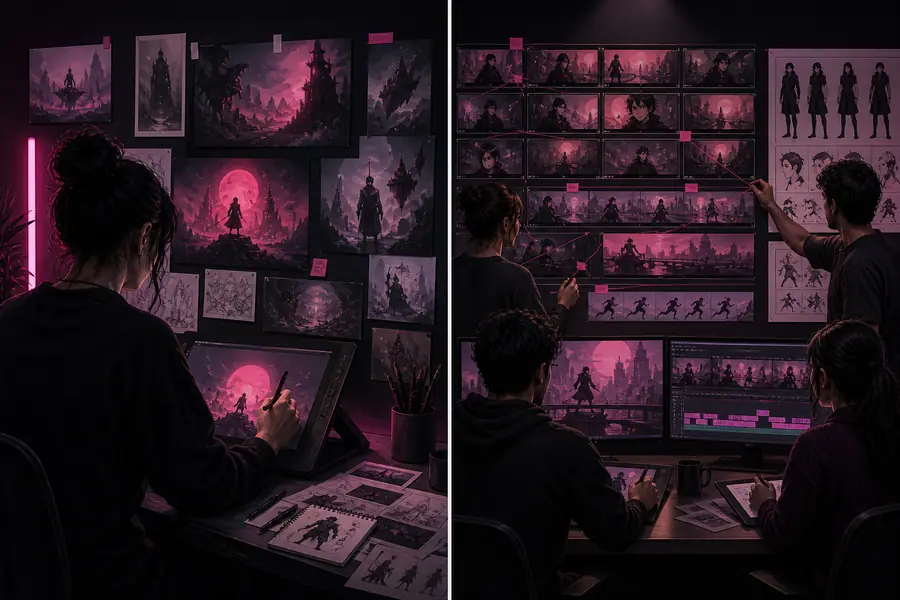
Speed is not just how quickly an image appears. It includes briefing, selecting a direction, correcting mistakes, organizing outputs, and preparing the result for its final use.
- Choose OpenArt AI when
- You expect to test multiple styles, models, or editing paths in one session.
- You need to turn rough generations into more specific deliverables.
- You want a shorter path between image generation and creative production.
- Choose Midjourney when
- You want fast visual ideation from a concise creative brief.
- You are exploring atmosphere, composition, costume, environments, or art direction.
- You value a focused interface and do not need a large editing toolkit.
- Compare the full workflow when
- Your team repeats the same asset types every week.
- Small corrections matter as much as the initial generation.
- Handoffs, references, and predictable outputs affect the real deadline.
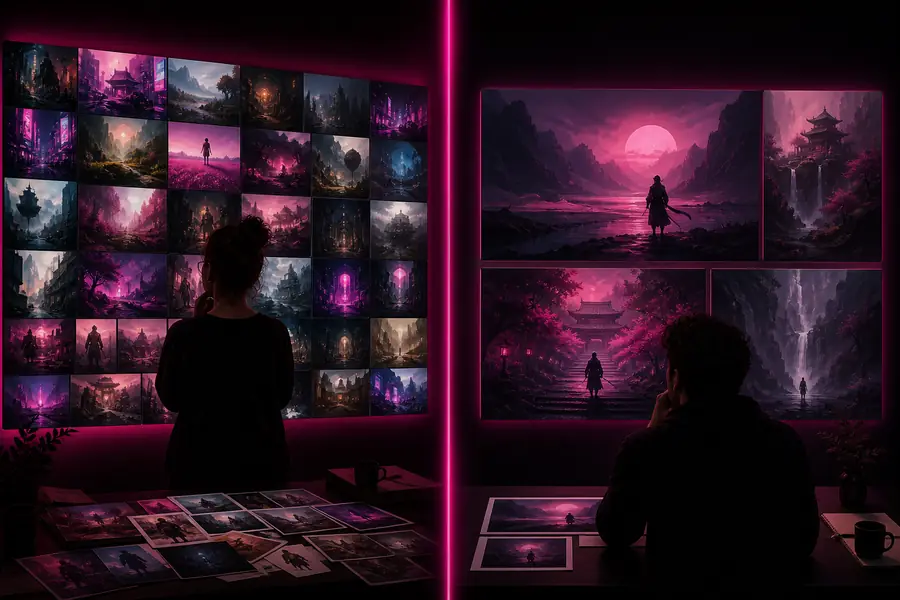
Midjourney may be faster at the first spark: write a prompt, review a set, and discover a compelling direction. OpenArt AI may be faster across the whole assignment when the brief changes shape. A creator who begins with a portrait, adds a product element, develops a character, and then edits the scene may save time by keeping those stages together.
In other words, compare the time to finish, not only the time to generate. If you are still deciding which kind of workflow suits you, the guide to openart ai for creators is a useful companion for thinking through repeatable creative tasks.